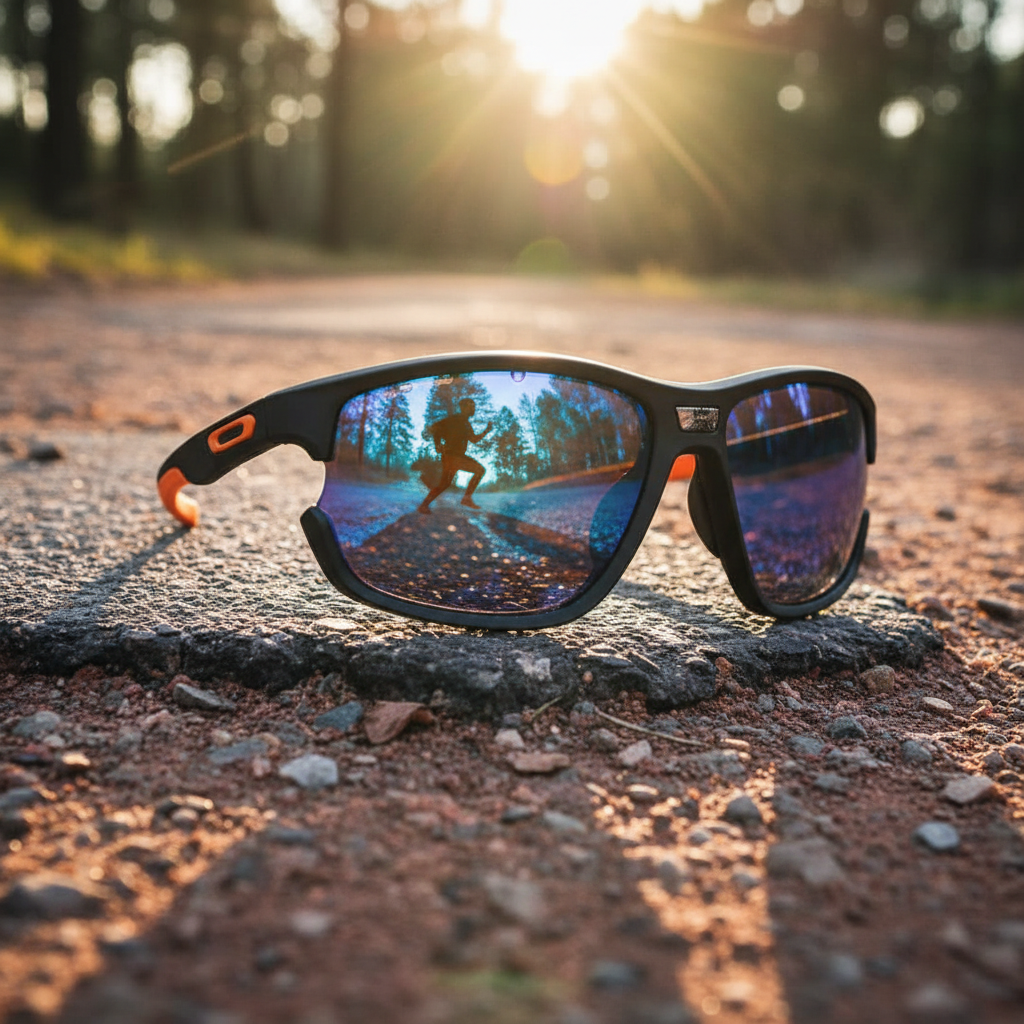
This article reviews the top-performing running sunglasses across different training environments, evaluating UV protection standards, comfort during high-impact activity, lens clarity, and anti-fog technology to help runners protect their eyes while maintaining optimal visibility.
Whether you're logging miles on technical trails or pounding pavement through busy streets, the right pair of running sunglasses can dramatically improve your performance and protect your vision. After extensive testing across varied conditions and analyzing hundreds of user reviews, we've identified the best running sunglasses that deliver exceptional UV protection, secure fit, crystal-clear optics, and reliable anti-fog technology for both trail and road runners.
Running sunglasses serve a dual purpose that goes far beyond style. First, they provide critical protection from harmful UV rays that can damage your eyes over time, potentially leading to cataracts and macular degeneration. Quality running sunglasses should offer 100% UVA and UVB protection as a baseline requirement.
Second, they act as a physical barrier against environmental hazards. On trails, this means protection from errant branches, flying debris, and insects. On roads, they shield against wind, dust, and glare that can cause eye strain and squinting—which creates facial tension that travels down to your neck and shoulders, potentially compromising your running form and efficiency.
The key differences between regular sunglasses and running-specific eyewear include: no-slip grip technology, lightweight construction, impact-resistant materials, ventilation systems to prevent fogging, and secure wraparound designs that stay in place during high-intensity movement.
At just $25-30, the Goodr OG sunglasses deliver impressive performance that punches well above their price point. These polarized sunglasses feature a classic wayfarer-style design with a special no-slip, no-bounce construction that stays secure even during sweaty runs. The lightweight polycarbonate frames and lenses provide full UV400 protection while weighing almost nothing on your face.
In our testing, we found the Goodr OGs remarkably secure for their casual appearance. The matte finish on the arms and nose bridge creates natural grip without requiring bulky rubber pads. They're available in dozens of fun color combinations, making them versatile enough for both running and everyday wear.
User Feedback: Amazon reviewers consistently praise their stay-put performance. One runner noted: "Went for a 30 mins run, 89 degrees 53% humidity, sweating like crazy. BUT they never bounced never slipped and were amazing." Another shared: "Stays on when I'm running in the hot and humid summers. I have received compliments on the glasses because they look so nice."
However, some users reported issues with lens delamination when exposed to excessive moisture, though the company's responsive customer service typically resolves these concerns. The wayfarer style naturally lacks side coverage compared to wraparound sport designs, and some runners experience slight bounce during very high-intensity efforts.
Best For: Budget-conscious runners seeking versatile, everyday sunglasses that perform well on casual to moderate training runs.
Shop Oakley Flak 2.0 XL on Amazon
The Oakley Flak 2.0 XL represents the gold standard for trail running sunglasses, featuring the brand's renowned Prizm lens technology that enhances contrast and visibility on technical terrain. The XL version offers extended lens coverage for improved peripheral vision and protection, while the semi-rimless design ensures unobstructed downward vision—crucial for navigating roots, rocks, and technical descents.
Weighing just 24 grams, these sunglasses feature Oakley's proprietary O-Matter frame material for durability without bulk. The Unobtainium nosepads and ear stems actually increase grip as you sweat, preventing slippage during intense trail sessions. The hydrophobic lens coating repels water, oils, and dust, while the 8.75 base lens curvature provides excellent peripheral coverage.
The interchangeable lens system allows you to swap between different Prizm options optimized for various conditions—Prizm Trail Torch lenses excel at enhancing trail details in variable light, while Prizm Road lenses work better for pavement pounding.
User Feedback: Amazon buyers consistently rate these 5 stars for running applications. One trail runner shared: "These glasses are cool looking and the Trail lenses do a great job of light and contrast that really helps one see the details on the trails and surrounding." Multiple users emphasize the exceptional clarity: "The clarity is phenomenal and I just don't have words to describe the clarity. The fit is amazing."
The primary drawback is cost—typically $150-200 depending on lens options. Some users also note that the frame hinges can appear in peripheral vision until you acclimate to them.
Best For: Serious trail runners who prioritize optical performance and are willing to invest in premium eye protection.
The Tifosi Swank sunglasses offer remarkable value with features typically found in glasses twice their $40 price point. The lightweight TR-90 nylon frames feel incredibly durable while staying comfortable during hours-long runs. The wayfarer-style design suits most face shapes, and the embedded polarization (rather than exterior film) provides better durability than budget competitors.
These sunglasses feature polycarbonate lenses with hydrophilic rubber nose pads that actually grip better as you sweat. In field testing across hot climbs, rolling singletrack, and trail descents, they stayed securely in place whether dry or drenched.
User Feedback: Runners appreciate their reliability and all-conditions performance. Multiple testers noted they worked equally well for running, cycling, and casual wear. The polarization quality impressed budget-conscious buyers who compared them favorably to more expensive alternatives.
Trade-offs include less technical lens options compared to premium brands and a more casual aesthetic that won't appeal to everyone. The polarization, while excellent for glare reduction, may affect depth perception on technical trails.
Best For: Runners seeking affordable, durable sunglasses with solid performance across multiple sports.
Shop Smith Shift Split MAG on Amazon
The Smith Shift Split MAG sunglasses with ChromaPop Photochromic lenses represent the ultimate solution for runners who train in constantly changing light conditions. The photochromic lenses automatically adjust from clear to gray based on ambient light, making them suitable for dawn-to-dusk runs or trails that alternate between dense forest and exposed ridgelines.
The MAG lens interchange system allows tool-free lens swapping in seconds, though the photochromic option largely eliminates this need. The large, slightly wraparound lenses provide excellent coverage while the ChromaPop technology enhances color and contrast for improved trail visibility. Two-position adjustable nose pads ensure a customized fit.
User Feedback: Runners praise the versatility and optical quality. Testers noted the lenses adapt quickly to changing conditions, maintaining optimal visibility during variable weather. The secure fit and minimal bounce make them reliable for everything from easy runs to race-day efforts.
The investment is substantial—expect to pay $200+ for photochromic options. Some users with narrower faces find them slightly wide, though the adjustable nose pads help dial in the fit.
Best For: All-conditions runners and ultrarunners who need reliable performance from pre-dawn starts through midday sun.
Shop Tifosi Vogel SL on Amazon
For runners who want technical features without breaking the bank, the Tifosi Vogel SL delivers exceptional value. These shield-style sunglasses feature hydrophilic nose pads that increase grip as you perspire, plus Comfort Grip technology in the ear pads to prevent bounce. The single-lens design provides unobstructed vision, while the vented lens design helps reduce fogging during high-output efforts.
At under $50, you get polycarbonate lenses with 100% UV protection and your choice of several mirror tint options to match different light conditions. The Grilamid TR-90 frames offer durability and flexibility that rival much more expensive options.
User Feedback: Long-term testers report these sunglasses maintain their performance after years of use. One runner noted they became a go-to pair for everything from marathon training to everyday wear. The lightweight feel and secure fit earn consistent praise.
The shield style looks more technical than casual, limiting everyday versatility. Some runners with larger faces find them slightly pinched, though they work well for narrow to medium face widths.
Best For: Price-conscious runners wanting technical performance features without premium pricing.
The Ombraz Refugio sunglasses take an unconventional approach with their completely armless design. Instead of traditional temples, they use a 100% recycled, anti-microbial cord system that wraps around your head. This eliminates pressure points and creates a truly custom fit that never pinches, bounces, or slips.
The TR-90 aerospace-grade nylon frames remain ultralight yet durable, while Carl Zeiss lenses provide exceptional clarity with full UVA/UVB protection in non-polarized tints. Integrated nose pads boost ventilation and prevent fogging, with optional removable shields available for extra coverage.
User Feedback: Runners initially skeptical of the unusual design become converts after testing. One reviewer noted: "They don't slip, they don't have any gaps for creeping sunlight, and even with my super sensitive eyes, they do a dang fine job keeping me comfortable." The customizable fit accommodates different head sizes and shapes better than traditional frames.
The unique look isn't for everyone, and the cord system requires adjustment time. At a higher price point, they're an investment in innovation that may not appeal to traditional runners.
Best For: Runners who struggle with traditional frame fit or want maximum comfort for ultra-distance efforts.
Shop Costa Del Mar Rincon II on Amazon
Originally designed for water sports, the Costa Del Mar Rincon II sunglasses bring superior glare reduction and UV protection to road running. The oversized polarized lenses provide nearly complete eye coverage, while the rubber nose pads and temple arms ensure a secure, slip-free fit even during sweaty road sessions.
Despite featuring heavier glass lens options, many runners report excellent stability with no slipping. The polarization excels at cutting glare from wet pavement, car windshields, and reflective surfaces—particularly valuable for urban and road training.
User Feedback: Testers praised their performance, with one noting they "far surpassed my expectations" for both comfort and functionality on road and trail runs. The huge lens coverage provides excellent peripheral vision and wind protection.
These aren't ideal for technical trail running where non-polarized lenses work better for depth perception. The glass lens options add weight compared to polycarbonate alternatives, though many runners don't notice during actual runs.
Best For: Road runners and urban trainers who face significant glare and want bombproof optical quality.
All quality running sunglasses should provide 100% protection from UVA and UVB rays, often labeled as UV400 protection. This blocks all light rays with wavelengths up to 400 nanometers, covering the entire UV spectrum.
UV exposure increases approximately 10% for every 1,000 meters of elevation gained, making eye protection particularly critical for mountain and trail runners. Even on cloudy days, up to 90% of UV rays penetrate cloud cover, while snow and water can reflect 80-90% of UV radiation back toward your eyes.
Look for sunglasses that meet or exceed ANSI Z87.1 standards for impact protection and optical clarity. This ensures the lenses can withstand high-velocity impacts and provide distortion-free vision across the entire lens surface—crucial for maintaining awareness on technical terrain.
Polarized lenses reduce glare from reflective surfaces like water, snow, and pavement by filtering horizontally-oriented light waves. They're excellent for road running and bright conditions but can actually reduce depth perception on technical trails by making it harder to see wet rocks, roots, and subtle terrain changes. Many trail runners prefer non-polarized lenses for this reason.
Photochromic lenses automatically adjust their tint based on UV exposure, darkening in bright sunlight and lightening in shade or indoors. They're ideal for runs that span multiple hours or variable conditions, eliminating the need to carry multiple lenses. The transition typically takes 30-60 seconds.
Many premium running sunglasses offer interchangeable lens systems, allowing you to swap between different tints optimized for specific conditions. Common options include clear lenses for low light, rose or amber tints for enhanced contrast on trails, and dark gray for bright sunshine.
Proprietary lens technologies like Oakley's Prizm, Smith's ChromaPop, and other contrast-enhancing treatments use specific color filters to heighten detail and improve visual clarity. These lenses can make trail features more visible and reduce eye fatigue during long runs.
Fogging occurs when warm, moist air from your face meets the cooler lens surface, causing condensation. Running-specific sunglasses combat this through several strategies:
Ventilation Systems: Strategic frame cutouts and vented lens designs promote airflow, carrying moisture away before it can condense. Look for sunglasses with ventilation at the top of the lens or along the frame.
Anti-Fog Coatings: Factory-applied hydrophobic treatments prevent water droplets from forming on lens surfaces. These coatings typically last for years when properly maintained.
Frame Design: Wraparound styles with slight standoff from the face allow air circulation while maintaining protection. However, this must be balanced against wind resistance and peripheral coverage.
To maintain anti-fog performance, clean lenses with a microfiber cloth and lukewarm water—avoid household cleaners, paper towels, or shirt hems that can damage coatings. Store sunglasses in a protective case to prevent scratches that compromise anti-fog treatments.
The best running sunglasses stay secure during high-impact activity without creating pressure points. Key fit factors include:
Nose Pads: Look for adjustable or hydrophilic (sweat-activating) nose pads that increase grip as you perspire. Some designs use rubberized materials that conform to your nose shape.
Temple Tips: The arms should curve gently around your ears with grippy materials at contact points. Many running sunglasses use Oakley's Unobtainium or similar compounds that increase traction when wet.
Frame Width: Ensure the frame matches your face width—too narrow creates pressure at the temples, while too wide allows movement and light leaks. Most brands offer multiple sizes or adjustable features.
Weight Distribution: Quality running sunglasses distribute weight evenly across the nose and ears. Lighter isn't always better if it sacrifices stability, but most performance options weigh 20-30 grams.
Trail runners often benefit from wraparound designs that provide maximum coverage against branches, dust, and wind. Non-polarized or photochromic lenses work best for changing light conditions under tree cover. Enhanced contrast lenses in rose or amber tints can help highlight trail features and improve safety on technical terrain.
Road runners typically prefer more streamlined, lightweight designs that minimize wind resistance at higher speeds. Polarized lenses excel at cutting glare from pavement and vehicles. If you run in urban environments, ensure adequate side coverage to protect against wind and debris without obstructing peripheral vision needed for traffic awareness.
Many runners maintain separate pairs for trail and road, or choose versatile options with interchangeable lenses to adapt to different training environments.
Extend the life of your running sunglasses with proper care:
- Clean lenses with microfiber cloths and lukewarm water, avoiding harsh chemicals
- Rinse dirt and grit before wiping to prevent scratches
- Store in a protective case when not in use
- Avoid leaving sunglasses in hot cars or direct sunlight when not wearing them
- Replace scratched lenses promptly, as damage compromises UV protection
- Check nose pads and temple tips periodically, replacing worn components
The best running sunglasses combine 100% UV protection, secure fit, quality optics, and appropriate features for your training environment. Budget-conscious runners will find excellent options in the $25-50 range from Goodr and Tifosi, while serious athletes may benefit from the optical superiority and advanced features of premium options from Oakley, Smith, and Costa.
Consider your typical running conditions—trail runners prioritize coverage and non-polarized options, while road runners benefit from glare reduction and streamlined profiles. Runners who train in variable conditions should consider photochromic lenses or interchangeable systems to maintain optimal visibility throughout the day.
Remember that even the best sunglasses won't protect your eyes if they're uncomfortable enough that you don't wear them. Prioritize fit and comfort alongside technical specifications, and don't hesitate to try multiple options to find your perfect match. Your eyes are irreplaceable—investing in quality protection is investing in your long-term running health.