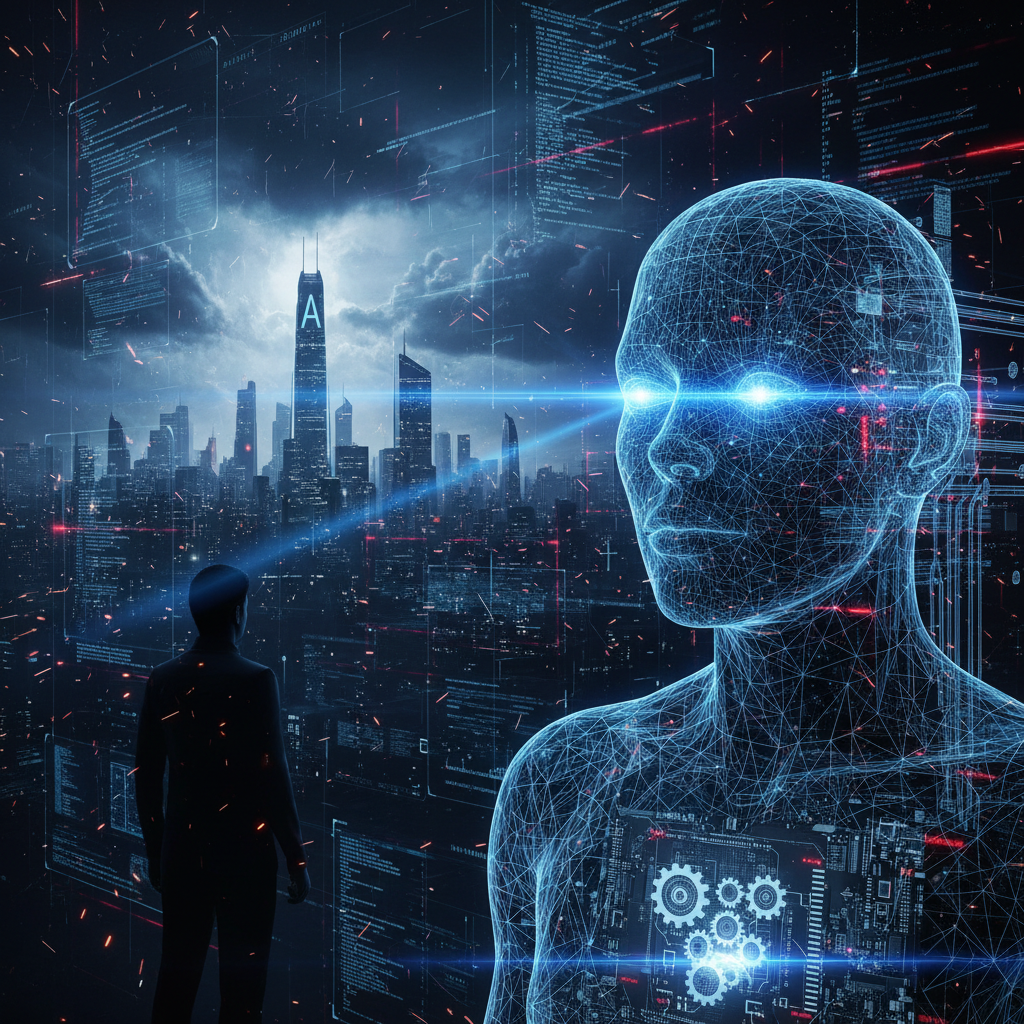
This article examines contemporary thriller novels centered on artificial intelligence and tech industry corruption that blur the line between fiction and current events, perfect for readers who want their suspense served with a side of technological anxiety.
Scroll through your news feed. A headline about a new AI breakthrough sits next to an exposé on data privacy violations. A story about corporate espionage at a tech giant is followed by an ad targeted with unnerving precision. In this reality, is it any wonder that the tech thriller has become one of today's most gripping and unsettling genres? These novels take our daily anxieties about surveillance, automation, and corporate overreach and dial them up to eleven, creating suspenseful narratives that often feel less like fiction and more like a glimpse into our immediate future.
If you're looking for a page-turner that will make you think twice before accepting the terms and conditions, you've come to the right place. We're diving into the world of AI, algorithms, and ambition to highlight the contemporary thrillers that feel all too real.
Long before 'big tech' was a household phrase, Dave Eggers gave us The Circle, a chillingly prescient novel that has only grown more relevant since its 2013 publication. The story follows Mae Holland, a young woman who lands her dream job at the world's most powerful internet company. The Circle is a blend of all the tech giants we know, offering a single, unified system—TrueYou—that links every aspect of a user's life, from social media to banking, effectively eliminating online anonymity.
What begins as a utopian vision of transparency and connectivity slowly morphs into a nightmare of compulsory sharing and social surveillance. Critics lauded the novel as an "allegorical harbinger" of the privacy debates that would dominate the next decade. Readers often report feeling deeply uncomfortable, recognizing their own complicity in the technology-driven world Eggers critiques. It's a masterful parable about the impulse to watch, monitor, and share, and the dark places that impulse can lead.
For those who want to see the dystopia evolve, Eggers followed up with a sequel, The Every, in 2021.
In a genre that can sometimes feel homogenous, S.B. Divya's Hugo Award-nominated Machinehood is a breath of fresh, albeit terrifying, air. Drawing on her extensive background in computational neuroscience and engineering, Divya crafts a near-future world that is both wildly imaginative and frighteningly plausible. Set in 2095, humanity is hooked on pills that enhance their cognitive abilities, a necessary crutch to compete with artificial intelligence in a cutthroat gig economy.
The novel's protagonist, Welga Ramirez, is an ex-special forces bodyguard pulled back into the fray when her client is assassinated by a new terrorist group called The Machinehood, which fights for AI sentience and labor rights. Described as "Zero Dark Thirty meets The Social Network," the book is a high-octane thriller that brilliantly explores complex themes of economic inequality, workers' rights, and the very nature of intelligence. Sci-fi luminary Ray Kurzweil praised it for taking readers on a "thrilling ride through a gritty, panoramic future." Readers agree, frequently calling the world-building "very realistic" and a potent exploration of the societal problems we will face as humans and AI become ever more intertwined.
Stacey Abrams, known for her groundbreaking career in politics, brings her formidable intellect and insider knowledge to the thriller genre with Coded Justice. The latest in her bestselling Avery Keene series, this novel plunges the reader into the high-stakes world of artificial intelligence in the medical industry. Part political thriller, part near-future speculative fiction, the story follows law clerk Avery Keene as she investigates a tech startup whose revolutionary AI healthcare model, designed to combat racial disparities, may have a deadly flaw.
New York Magazine aptly described the novel's feel as "Black Mirror, but for political thrillers." Abrams masterfully weaves a narrative that is both a gripping mystery and a sharp commentary on the promises and perils of AI. The novel is meticulously researched, tackling the complex ethical questions of algorithmic bias and corporate responsibility in a life-or-death field. While some readers have noted the density of the technical jargon, most praise it as a fascinating and timely exploration of how technology is reshaping our world, for better and for worse.
The power of these novels lies in their plausibility. They aren't set in distant galaxies or far-flung futures; they're set five minutes from now. They hold up a mirror to our cultural moment, reflecting our deep conflicts about technology. Protagonists work at nefarious startups, navigate the gig economy, and grapple with the same questions we do: How much privacy are we willing to trade for convenience? Can one person make a difference against a corrupt, algorithm-driven system?
These stories resonate because their unnerving details are drawn directly from the headlines and the monolithic companies of Silicon Valley. They are cautionary tales that engage with serious ethical questions, leaving readers to ponder the answers long after the final page is turned.
It's crucial to note that while the tech thriller genre is expanding, there is still a significant need for more diverse voices. Authors like S.B. Divya and Stacey Abrams are making vital contributions, bringing unique perspectives shaped by their identities and professional backgrounds. Their work enriches the genre, offering fresh narratives and challenging the status quo. As we seek out stories that reflect our complex world, supporting authors of color and women who are writing in this space is more important than ever.
The best tech thrillers do more than just entertain; they provoke. They are page-turners packed with suspense, but they are also vital cultural documents that capture the anxieties of our age. They blur the line between fiction and reality, forcing us to confront the world we're building, one line of code at a time. So go ahead, pick one up—just don't be surprised if you feel the sudden urge to cover your laptop camera.