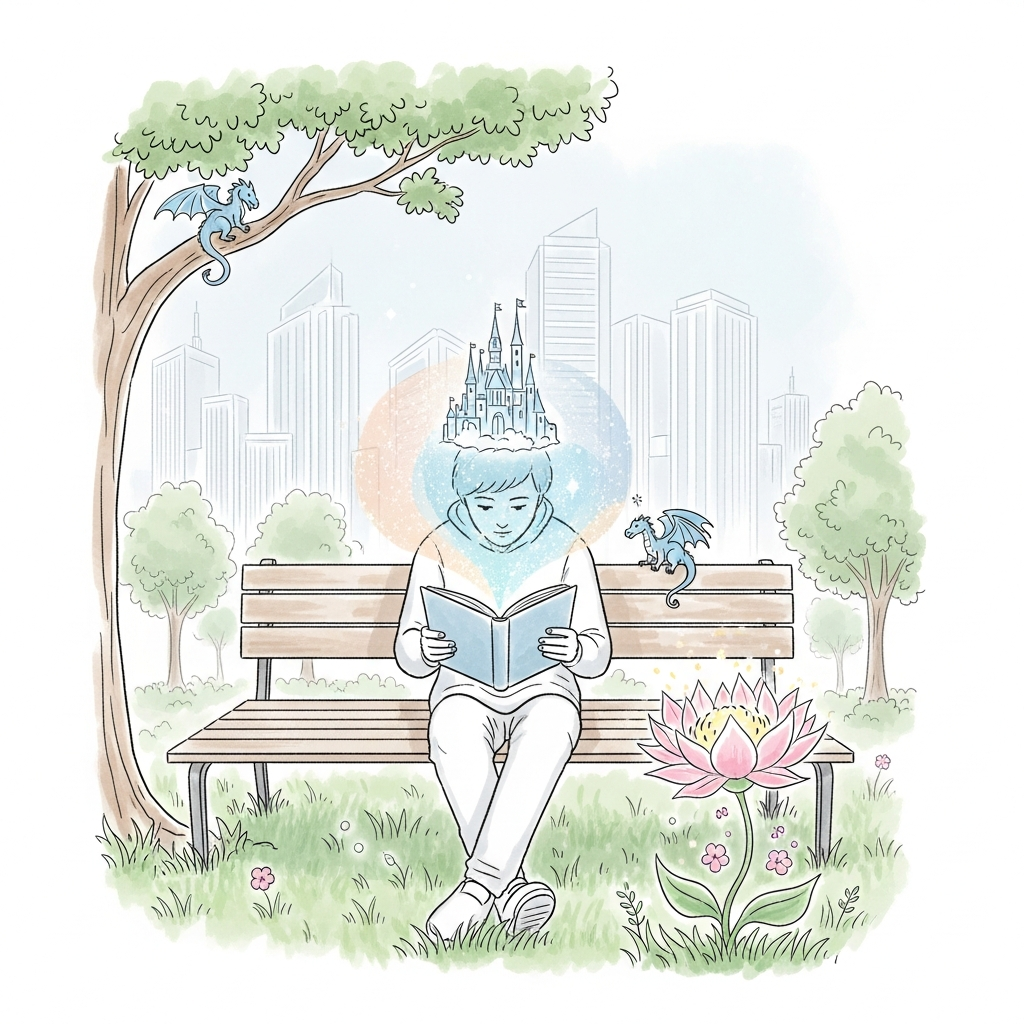
This article explores enchanting contemporary fiction that weaves magical elements into everyday settings, showcasing how modern authors use fantastical touches to illuminate real-world struggles and human connection.
In the literary world, the line between the mundane and the miraculous is often thinner than we think. Magical realism, a genre long associated with the lush landscapes of Latin American literature and the giants of the 20th century like Gabriel García Márquez and Isabel Allende, has found a vibrant new home in the 21st century. Today’s authors are taking the genre out of remote villages and historical sagas, planting it firmly in modern city apartments, bustling tea shops, and even local aquariums.
Contemporary magical realism does more than just offer an escape; it provides a unique lens through which to view the complexities of modern life. In a world dominated by rapid technological change and social upheaval, reality often feels surreal on its own. By introducing subtle elements of magic—a tea leaf that predicts the future, a woman no one can remember, or a grandmother transforming into a tree—these novels illuminate our deepest human struggles: isolation, identity, grief, and the need for connection. Below, we explore five standout contemporary novels where the impossible bleeds seamlessly into the everyday.
Zoraida Córdova delivers a stunning entry into the modern magical realism canon with a story that is as much about the weight of family secrets as it is about magic. The novel centers on the Montoyas, a family accustomed to their matriarch, Orquídea Divina, never aging. But when Orquídea finally invites her descendants to her funeral to collect their inheritance, she transforms in a way that shocks them all, leaving her granddaughter Marimar to piece together the truth.
This novel excels in grounding its fantastical elements within the messy, relatable dynamics of a dispersed family. The magic here is not whimsical; it is rooted in the soil of Ecuador and the sacrifices made for survival. Córdova weaves a narrative that spans generations and geography, moving from the grandmother’s mysterious past to Marimar’s struggle to build a life in the present. It is a profound look at what we inherit from our ancestors—not just their gifts, but their trauma and their unfinished business.
Buy The Inheritance of Orquídea Divina at Amazon
While some magical realism remains quiet, V.E. Schwab’s bestseller is a sweeping exploration of memory and immortality that crashes into the modern world. In 1714, a young woman named Adeline LaRue makes a desperate Faustian bargain to escape a loveless marriage. The cost? She will live forever, but she is cursed to be forgotten by everyone she meets the moment she leaves their sight.
The novel shines brightest when it brings Addie into the 21st century. After 300 years of navigating the world as a ghost in plain sight, she walks into a hidden bookstore in New York City and meets a young man who remembers her. Schwab uses this magical premise to explore a deeply human fear: the fear of leaving no mark on the world. Amidst the backdrop of modern art, coffee shops, and the loneliness of a crowded city, the magical curse serves as a poignant metaphor for the isolation many feel in contemporary society. It is a story about the defiance of joy and the enduring power of art.
Buy The Invisible Life of Addie LaRue at Amazon
Sometimes the magical element in a story is not a spell or a curse, but a perspective shift so radical it feels supernatural. Shelby Van Pelt’s debut novel introduces readers to Tova Sullivan, a widow working the night shift at the Sowell Bay Aquarium to cope with the disappearance of her son thirty years prior. Her life intersects with Marcellus, a giant Pacific octopus living in captivity.
Marcellus is no ordinary sea creature; he is sentient, curmudgeonly, and remarkably observant of the humans who stare at him through the glass. Through Marcellus’s narration, Van Pelt infuses the story with a sense of wonder and dry humor that elevates a standard narrative of grief into something extraordinary. The "magic" here is biological but treated with the reverence of a fairy tale. As Marcellus helps Tova uncover the truth about her son, the novel explores the unlikely connections that save us from despair. It is a heartwarming testament to the idea that intelligence and soulfulness can be found in the most unexpected places.
Buy Remarkably Bright Creatures at Amazon
For a lighter, more romantic take on the genre, Roselle Lim presents a delightful story about the burden of knowing too much. Vanessa Yu has a gift—or a curse, as she sees it. She can see the future in tea leaves, a talent that frequently leads to awkward family situations and matchmaking disasters. Desperate to escape her matchmaking aunt and her own clairvoyance, she travels to Paris to help her aunt run a tea shop.
Lim masterfully blends the sensory delights of food and travel with the fantastical. The magic in this novel serves as a metaphor for anxiety and the struggle to control one’s destiny. Vanessa’s journey is one of self-acceptance, learning that knowing the future is less important than living the present. Set against the enchanting backdrop of Paris, the novel treats its magical elements as a natural extension of Vanessa’s heritage and identity. It is a comforting read that reminds us that while we cannot control fate, we can choose how we face it.
Buy Vanessa Yu’s Magical Paris Tea Shop at Amazon
Winner of the 2022 Booker Prize, this novel offers a darker, satirical, and politically charged variety of magical realism. Set in Sri Lanka in 1990, during the height of the civil war, the story follows Maali Almeida, a war photographer, gambler, and closeted gay man who wakes up dead. He has seven moons—seven nights—to navigate the chaotic bureaucracy of the afterlife and lead his loved ones to a stash of photographs that will expose the brutalities of the conflict.
While set a few decades ago, the novel’s frenetic energy and exploration of political violence feel incredibly urgent and modern. Karunatilaka creates an afterlife that mirrors the absurdity and tragedy of the living world, blurring the lines between ghosts and government officials. The magic here is gritty and surreal, used to process collective trauma and the search for justice in a senseless world. It is a challenging, riotous, and heartbreaking read that proves magical realism is a powerful tool for confronting history’s darkest chapters.
Buy The Seven Moons of Maali Almeida at Amazon
These five novels demonstrate that magical realism is not a static genre of the past, but a living, breathing mode of storytelling that adapts to the times. Whether it is used to articulate the pain of a diaspora family, the loneliness of urban life, or the absurdity of war, the inclusion of the fantastic allows these authors to speak truths that strict realism sometimes cannot reach. In a modern world that often feels fractured, these stories remind us that there is still wonder to be found—if only we are willing to look for it.