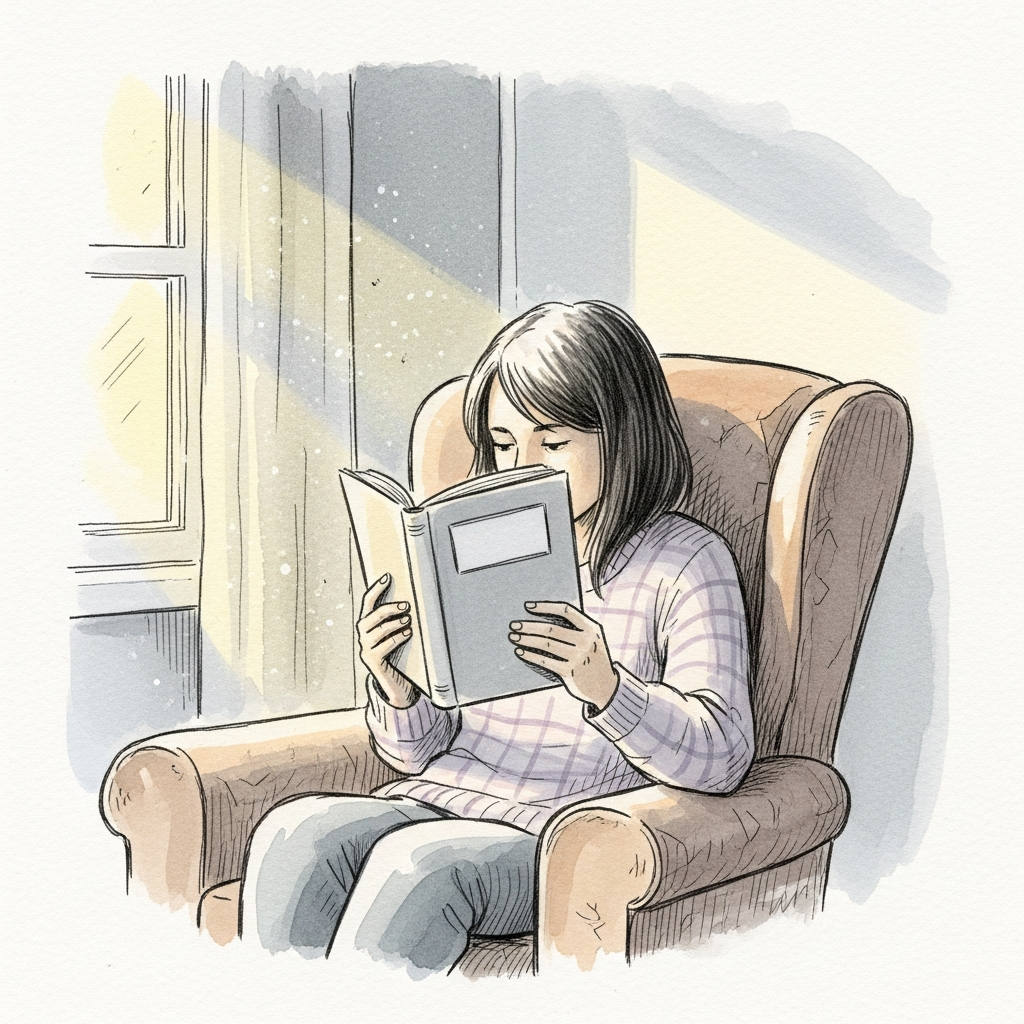
This curated guide showcases five novels that authentically portray anxiety, depression, and trauma, where internal battles become the heart of the story.
For generations, literature has served as a mirror to the human condition, yet the reflection of mental illness was often distorted. Characters struggling with their mental health were frequently relegated to the sidelines, used as tragic plot devices, or cast as villains. Fortunately, the landscape of fiction is shifting. Today, authors are crafting narratives that give a loud, clear voice to the silent struggles of anxiety, depression, trauma, and OCD. These stories prioritize authenticity over sensation, validating the experiences of those who live with these conditions and cultivating deep empathy in those who do not.
Authentic representation in fiction matters because it dismantles the isolation that often accompanies mental illness. When a reader sees their own intrusive thoughts or depressive episodes articulated on the page, the stigma begins to crumble. The following novels are exemplary not just for their literary merit, but for the raw honesty with which they approach the complexities of the human mind.
Jennifer Niven’s 2015 novel is a profound exploration of the intersection between love and mental illness. The story follows two teenagers, Finch and Violet, who meet under precarious circumstances on the ledge of their school’s bell tower. While the premise could easily veer into melodrama, Niven grounds the narrative in emotional realism.
The novel is particularly acclaimed for its dual perspective, which allows readers to intimately understand the distinct battles each character fights. Finch’s struggle with bipolar disorder and suicidal ideation is portrayed with heartbreaking clarity, illustrating the erratic highs and the crushing lows that define his existence. Crucially, the book avoids the harmful trope that love can "cure" mental illness. Instead, it posits that while connection is vital, it is not a substitute for professional help or chemical balance. It is a beautiful, devastating read that respects the gravity of its subject matter.
Buy All the Bright Places on Amazon
John Green is a titan of Young Adult fiction, but Turtles All the Way Down stands apart as his most personal work. The protagonist, sixteen-year-old Aza Holmes, is ostensibly trying to solve a mystery involving a fugitive billionaire, but the true conflict of the novel takes place within her own mind.
Green, who has been open about his own experiences with Obsessive-Compulsive Disorder (OCD), rejects the media stereotype of OCD as merely a quirk for cleanliness or order. Instead, he plunges the reader into the tightening spiral of Aza’s intrusive thoughts. The narrative structure itself mimics the relentless, claustrophobic nature of anxiety spirals, offering a visceral experience of what it means to be trapped in one's own consciousness. It is a masterful depiction of how mental illness can distort one's sense of self and reality.
Buy Turtles All the Way Down on Amazon
For a stark, unflinching look at the physical manifestation of emotional pain, Kathleen Glasgow’s Girl in Pieces is an essential, albeit heavy, read. The novel follows seventeen-year-old Charlotte "Charlie" Davis, a girl who has lost almost everything and uses self-harm to cope with the devastation of her reality.
This book is significant for its portrayal of the recovery process. Glasgow does not offer a sanitized version of healing; she shows the scars, the relapses, and the exhausting effort required to choose life every single day. The narrative takes readers from the sterile safety of a treatment center to the chaotic challenges of the outside world, emphasizing that resilience is not a fixed state but a continuous practice. It is a raw portrait of grief and survival that ultimately points toward hope.
While many books on mental health focus on the tragedy, Ned Vizzini’s It's Kind of a Funny Story manages to find humor and humanity within the walls of a psychiatric ward. Inspired by the author's own brief hospitalization, the story follows Craig Gilner, an ambitious teenager whose crushing anxiety about his future drives him to check himself into a hospital.
The strength of this novel lies in its community. Inside the ward, Craig meets a diverse cast of characters who challenge his preconceptions about "crazy" people. Vizzini demystifies the psychiatric experience, stripping away the fear often associated with inpatient care. The book highlights the importance of finding one's "anchors"—the small things that tether us to the world—and teaches readers that it is okay to step off the treadmill of high expectations to prioritize one's well-being.
Buy It's Kind of a Funny Story on Amazon
No list of fiction regarding mental health is complete without Sylvia Plath’s modern classic, The Bell Jar. First published in 1963, this semi-autobiographical novel chronicles the descent of Esther Greenwood, a brilliant and talented young woman, into the gripping darkness of clinical depression.
Plath’s prose is unmatched in its ability to articulate the suffocation of mental illness. Her metaphor of the "bell jar"—suspended in a vacuum, stewing in one's own sour air—remains one of the most enduring and accurate descriptions of depression in literary history. The novel captures the detachment, the lethargy, and the terrifying logic of a mind turning against itself. It is a haunting testament to Plath’s talent and a foundational text for understanding the interiority of psychological collapse.
Reading fiction about mental health is not just a passive activity; it is an act of witnessing. These novels bridge the gap between internal suffering and external understanding. They remind those who are struggling that they are not alone in their thoughts, and they educate those who are lucky enough not to understand these struggles firsthand. By engaging with these loud voices, we can begin to break the silence that has surrounded mental health for far too long.