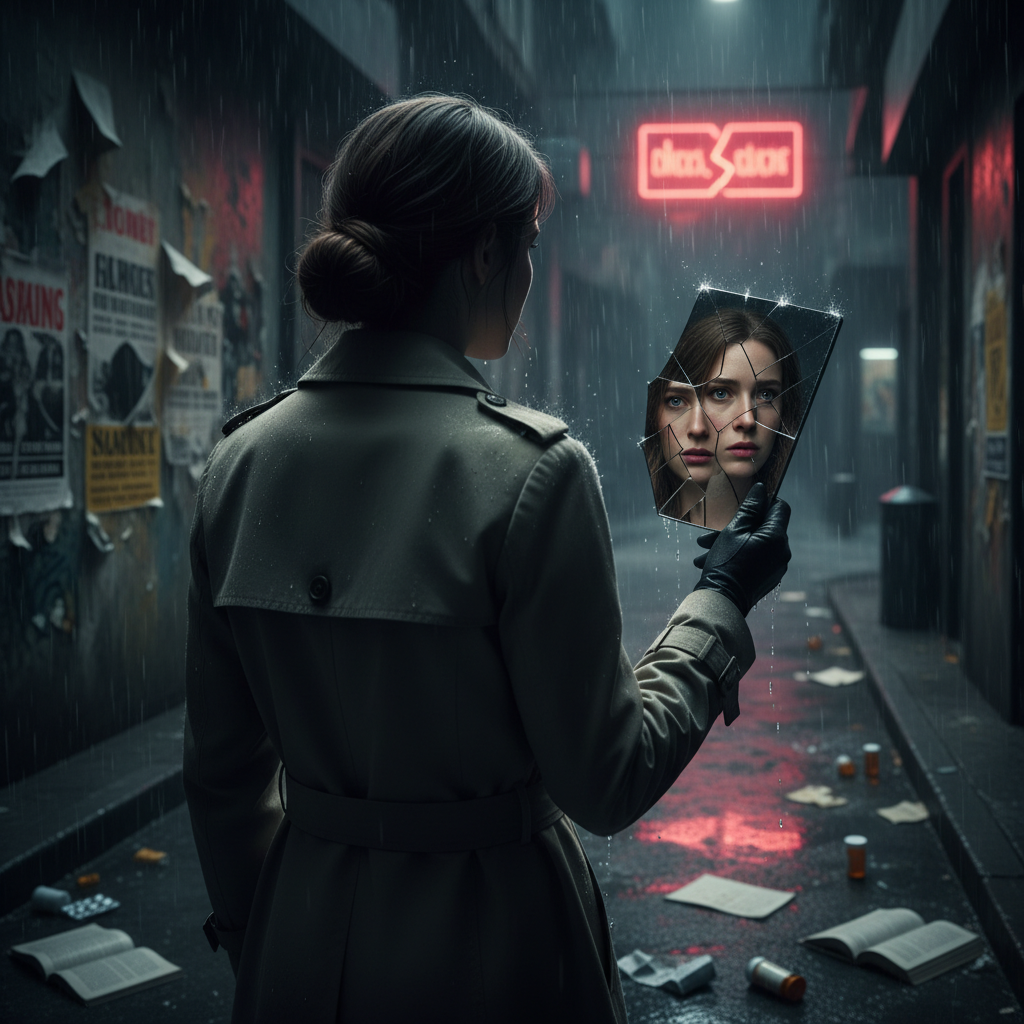
This article explores gripping psychological thrillers featuring unreliable narrators that subvert reader expectations and demand multiple readings to uncover the truth.
There's a unique thrill in reading a story where you can't trust the person telling it. You lean in closer, searching for cracks in their narrative, questioning their motives, and becoming a detective in your own right. This is the magic of the unreliable narrator, a literary device that has become the beating heart of the modern psychological thriller. These are the stories that stay with you long after the final page, forcing you to reconsider everything you thought you knew. They are masterclasses in misdirection, where the truth is a moving target and reality is constantly up for debate.
An unreliable narrator is a storyteller whose credibility has been compromised. Whether through deliberate deception, psychological impairment, trauma-induced memory loss, or a skewed perception of reality, their account is not to be taken at face value. This technique transforms reading from a passive experience into an active investigation. The central question shifts from "What happens next?" to the far more compelling "What is *really* going on?"
While the trope isn't new, the 2012 release of Gillian Flynn's Gone Girl ignited a firestorm, launching the domestic suspense subgenre into the stratosphere. Suddenly, readers weren't just looking for a good scare; they were seeking intellectual engagement, eager to unravel the deceptions of seemingly ordinary people. This guide dives into the essential psychological thrillers that have perfected the art of the unreliable narrator, from the modern classics that defined the genre to the contemporary voices keeping it fresh and terrifying.
These are the blockbusters that made the unreliable narrator a household name. They are propulsive, shocking, and have set the standard for psychological suspense in the 21st century.
It's impossible to discuss this topic without starting here. On the morning of their fifth wedding anniversary, Amy Dunne vanishes, leaving behind a scene that suggests foul play. Her husband, Nick, is the primary suspect, but as the story unfolds through alternating perspectives, it becomes chillingly clear that neither Nick nor Amy is who they seem. Gone Girl is a masterwork of dual unreliable narrators, a searing indictment of marriage and media that will have you questioning every page until its jaw-dropping conclusion.
Rachel Watson's life is in a downward spiral. Her daily commute is the only structure she has left, and she becomes fixated on a seemingly perfect couple she watches from the train window. But one day, she sees something that shatters this illusion. When the woman she's been watching goes missing, Rachel inserts herself into the investigation. The problem? Rachel is an alcoholic whose memory is riddled with blackouts. Can she trust her own recollections? Can we? The Girl on the Train is a gripping tale of memory, obsession, and the fuzzy line between witness and suspect.
Alicia Berenson, a famous painter, shoots her husband five times in the face and then never speaks another word. Her silence turns a domestic tragedy into a national obsession. Psychotherapist Theo Faber is convinced he can get her to talk and unravel the mystery of what happened that night. He becomes obsessed with Alicia's case, but his own motivations are far from clear. The Silent Patient builds to one of the most talked-about twists in recent memory, a reveal that hinges entirely on the narrator's carefully constructed deception.
Joe Goldberg is charming, intelligent, and works in a bookstore. When an aspiring writer named Beck walks in, he's instantly smitten. But Joe's infatuation is not a fairytale romance; it's a terrifying obsession. Narrated from Joe's first-person perspective, You pulls you into the mind of a stalker who justifies his every horrifying action. The unreliability here is insidious—Joe presents himself as the romantic hero of his own story, forcing the reader into a deeply uncomfortable and utterly captivating complicity.
Certain authors have built their careers on crafting intricate plots with narrators you can't trust. These books demonstrate a consistent mastery of suspense and psychological depth.
Before Gone Girl, Flynn gave us this dark, Southern Gothic masterpiece. Journalist Camille Preaker, fresh from a stay at a psychiatric hospital, is sent back to her hometown to cover the murders of two young girls. Returning to her childhood home means confronting her neurotic, hypochondriac mother and a half-sister she barely knows. Camille's narration is clouded by her own deep-seated trauma and self-destructive habits, making her investigation into the town's darkness an equally painful exploration of her own. Sharp Objects is a chilling and unforgettable debut.
Lo Blacklock, a travel journalist, is on assignment for a luxury cruise. Her career is on the line, and she's already on edge after a break-in at her apartment. Late one night, she is certain she hears a body being thrown overboard from the cabin next door. But when she reports it, all passengers are accounted for, and the cabin is empty. Is Lo's anxiety causing her to imagine things, or is something sinister happening on the high seas? The Woman in Cabin 10 is a classic locked-room mystery where the narrator's credibility is constantly under fire.
You think you know the story: a jealous ex-wife is obsessed with her replacement—a beautiful, younger woman who is about to marry the man they both love. But with The Wife Between Us, you'll be wrong. This novel brilliantly subverts expectations, playing with perspective and timeline to deliver a series of stunning twists. The narration is a carefully constructed puzzle box designed to mislead you at every turn, proving that appearances can be profoundly deceiving.
Christine Lucas suffers from a rare form of amnesia. Following a traumatic accident, she wakes up every morning with no memory of her past. Her husband, Ben, patiently helps her piece her life together each day. But when Christine finds a hidden journal in which she's written herself a stark warning—"Don't trust Ben"—her world fractures. Before I Go to Sleep is a high-concept thriller where the narrator's unreliability is a medical condition, creating a terrifying and claustrophobic search for truth.
The title says it all. Amber Reynolds is in a coma. She can't move, speak, or open her eyes, but she can hear everything. She doesn't remember what put her here, but she has a terrifying suspicion that her husband was involved. The narrative alternates between her paralyzed present, the week leading up to the accident, and childhood diaries from long ago. Amber is our only guide, but she's an admittedly dishonest one. Sometimes I Lie is a dizzying, fast-paced thriller that will keep you guessing.
The genre continues to evolve, with new authors bringing fresh perspectives, diverse characters, and innovative narrative structures to the table.
Five years ago, Lucy was found wandering the streets, covered in her best friend Savvy's blood. Savvy was dead, and Lucy had a head injury that wiped her memory of that night. She fled her small town, but now, a hit true-crime podcast is investigating the cold case, forcing her to return. The podcast host is handsome, charming, and thinks she's the killer. To prove her innocence, Lucy must investigate her own past, but how can she find the truth when she can't even trust her own mind? Listen for the Lie is a sharp, modern thriller for the podcast era.
Toby is a lucky man—charming, privileged, and skating through life—until a brutal home invasion leaves him with a severe head injury and gaps in his memory. He retreats to his family's ancestral home to recover, but his sanctuary is shattered when a human skull is discovered in the garden, tangled in the roots of an old witch elm. The police investigation forces Toby to question his own past and the idyllic version of his life he's always believed. The Witch Elm is a slow-burn, character-driven masterpiece where trauma fractures not only memory but identity itself.
Dubbed "The Breakfast Club with a body count," this #1 New York Times bestseller brings the unreliable narrator to the halls of high school. Five students walk into detention, but only four walk out alive. The victim, Simon, ran a notorious gossip app and was about to post devastating secrets about the other four. All of them are suspects, and each narrates a portion of the book. As the title promises, at least one of them is a liar. One of Us Is Lying is a compulsive YA thriller that proves you don't have to be an adult to have dark secrets.
The Sinclair family is wealthy, beautiful, and spends every summer on their private island. But two summers ago, something happened to Cadence Sinclair Eastman that left her with debilitating migraines and amnesia. Now, she's back on the island, trying to piece together the truth with her cousins, the Liars. We Were Liars is a modern, sophisticated suspense novel where the narrator's fractured memory holds the key to a devastating secret. The final reveal is a gut punch you won't see coming.
The enduring appeal of the unreliable narrator lies in the interactive experience it creates. We are not just readers; we are interrogators, psychologists, and jurors. We actively sift through evidence, weigh testimony, and search for the single thread that will unravel the entire tapestry of lies. The best authors in this genre play fair—they don't just withhold information for a cheap twist. Instead, they plant subtle clues, contradictions, and red herrings that are only visible on a second reading. The payoff isn't just the shock of the reveal, but the satisfying click of understanding as all the pieces fall into place.
Whether the narrator's unreliability stems from a malicious desire to control the narrative, the fog of addiction, the holes of amnesia, or the deep fractures of trauma, these stories tap into a fundamental human truth: memory is fallible, perception is subjective, and the stories we tell ourselves are often the most deceptive of all. So, pick up one of these mind-bending thrillers, embrace the confusion, and prepare to question everything. The truth is in there somewhere—if you can find it.