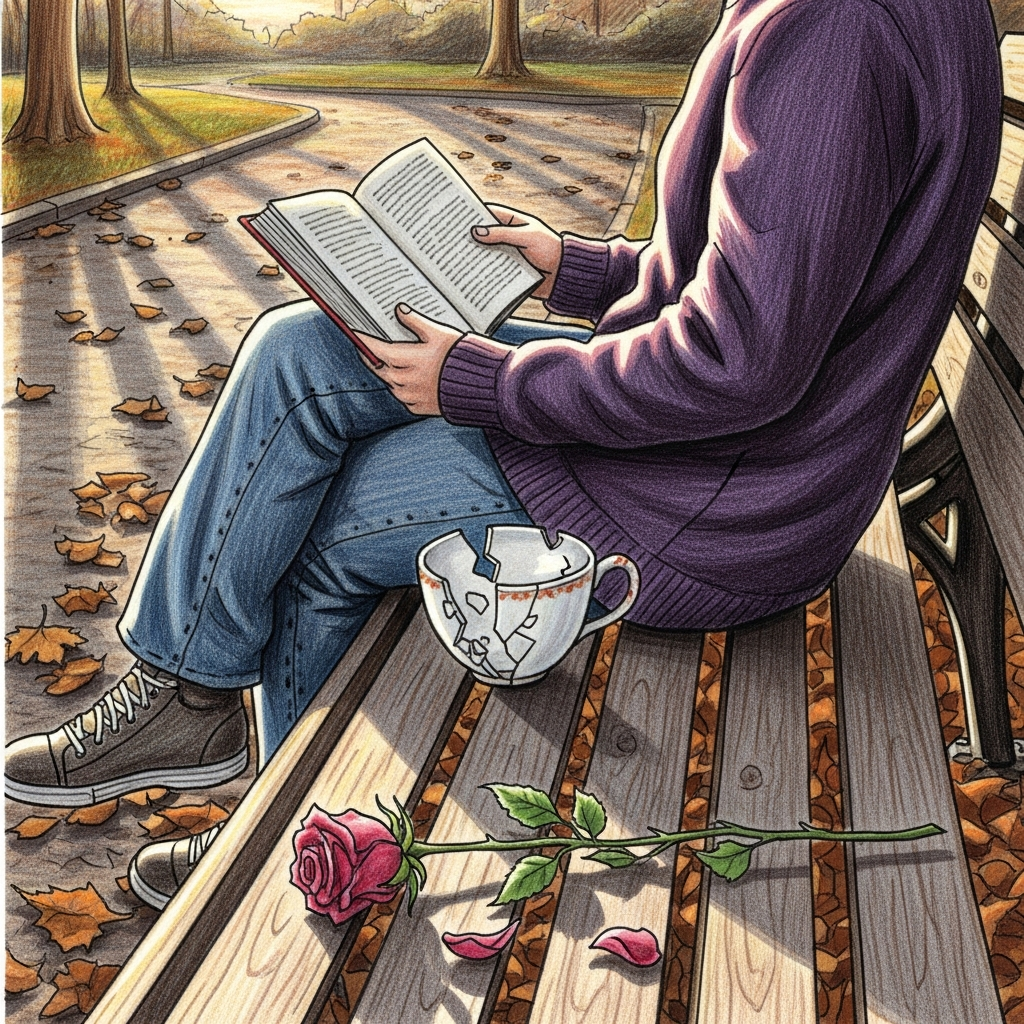
This review explores five contemporary and classic novels that masterfully depict the deterioration of friendships and family bonds, examining themes of jealousy, betrayal, and the painful complexity of human connection.
Literature has long been obsessed with the romance of connection—the soulmate, the ride-or-die best friend, the unbreakable family unit. But there is a darker, perhaps more honest tradition in fiction that examines what happens when those bonds curdle. The novels that stick with us most persistently are often those that explore the nuanced pain of relationships gone wrong: the slow erosion of trust, the sharp sting of betrayal, and the suffocating weight of codependency.
In these narratives, the villain is rarely a stranger. Instead, the danger comes from the people who know us best. We are drawn to these stories not just for the drama, but because they validate a complex reality: that love and toxicity often coexist, and that the end of a friendship can be just as devastating as the end of a marriage.
Below, we examine five essential novels that masterfully dissect the anatomy of broken bonds. From the competitive streets of Naples to the segregated American South, these works by women and authors of color illustrate how power imbalances, secrets, and jealousy can fracture even the deepest connections.
In the canon of American literature, few friendships are as intense or as devastating as the one between Sula Peace and Nel Wright. Toni Morrison’s 1973 masterpiece is often cited as a foundational text for exploring the duality of female friendship. Set in the close-knit, Black community of the Bottom in Medallion, Ohio, the novel traces the lives of two girls who grow up as two halves of the same soul.
Morrison does not present a sanitized version of sisterhood. Sula and Nel are bound by a dark secret from their childhood, a shared trauma that cements their loyalty until adulthood pulls them in radically different directions. Nel chooses the path of convention, becoming a wife and mother who upholds the community’s social mores. Sula, by contrast, rejects all societal constraints, returning to the Bottom as a pariah—a woman who answers to no one.
The toxicity in Sula is not one-sided; it stems from a profound misunderstanding of what they owe one another. When Sula commits an act of betrayal that Nel finds unforgivable, Morrison challenges the reader to question the limits of forgiveness. It is a story about how a friend can be both your greatest sustenance and the source of your deepest injury.
If Sula explores the spiritual merging of friends, Elena Ferrante’s My Brilliant Friend—the first in her acclaimed Neapolitan Quartet—explores the violent friction of their separation. Set against the backdrop of a rough, vibrant neighborhood in 1950s Naples, the novel introduces us to Elena (Lenù) and Lila, two intelligent girls trying to transcend the violence and poverty of their upbringing.
Ferrante captures the specific, suffocating intimacy of childhood friendship like few other writers. The relationship between Lenù and Lila is defined by a fierce intellectual rivalry. They inspire each other to be better, but they also harbor deep-seated jealousies. Lenù, the narrator, defines her entire existence in relation to Lila, constantly measuring her own worth against Lila’s brilliance and magnetism.
This is a portrait of a toxic friendship driven by competition and class anxiety. As they grow older, their paths diverge—one continues her education while the other is forced into marriage—yet they remain tethered. Ferrante masterfully depicts how a friendship can become a cage, where love is inextricably knotted with the fear of being left behind.
Buy My Brilliant Friend by Elena Ferrante
Sometimes the most toxic dynamic is not between friends, but between sisters who choose to become strangers. In The Vanishing Half, Brit Bennett explores a fracture that spans generations and racial identities. The Vignes sisters are identical twins growing up in Mallard, Louisiana, a small Black community obsessed with light skin. In their teenage years, they run away together, but their lives eventually split along the fault line of race.
One sister, Desiree, eventually returns to Mallard with her dark-skinned daughter. The other, Stella, decides to pass as white, marrying a white man and burying her past entirely. Stella’s decision is a profound betrayal, not just of her sister, but of her mother and her heritage. The toxicity here is found in the silence; Stella builds a life based on a lie that requires the absolute erasure of her family to sustain.
Bennett uses this estrangement to explore the cost of self-preservation. The novel asks difficult questions about loyalty: Do we owe our lives to our family, or do we have the right to invent ourselves anew, even if it means destroying the bond? It is a sweeping examination of how secrets can fester, poisoning the lives of not just the siblings, but their daughters as well.
Buy The Vanishing Half by Brit Bennett
While many literary explorations of toxic relationships are somber, Oyinkan Braithwaite offers a satirical, sharp-edged take on the theme in My Sister, the Serial Killer. Set in Lagos, Nigeria, this noir-infused novel focuses on Korede, a bitter but fiercely loyal nurse whose life revolves around cleaning up the literal messes made by her beautiful younger sister, Ayoola.
The premise is established immediately: Ayoola has a habit of killing her boyfriends in "self-defense," and Korede has a habit of bringing the bleach and knowing exactly how to scrub blood out of a car trunk. The dynamic is a twisted extreme of sibling codependency. Ayoola is the favored child, floating through life on a cloud of charm and beauty, oblivious to the destruction she causes. Korede is the practical enabler, resentful yet unable to sever the tie.
Braithwaite uses this dark comedy to critique how society excuses the behavior of beautiful women and how family obligation can morph into complicity. The toxicity here is lethal, yet the bond remains unbreakable. It forces the reader to ask: How far would you go to protect your family? And at what point does loyalty become a moral failing?
Buy My Sister, the Serial Killer by Oyinkan Braithwaite
Few novels have polarized readers and critics quite like Hanya Yanagihara’s A Little Life. At its center is a group of four male friends navigating life in New York City, but the gravity of the novel pulls inevitably toward the enigmatic and traumatized Jude St. Francis. While the book is often discussed in terms of its depictions of trauma, it is also a profound examination of the limits of friendship and the darker side of dependency.
The relationships in the book are intense and all-consuming. Jude’s friends, particularly the actor Willem, devote their lives to caring for him, trying to heal a history of abuse that Jude refuses to fully disclose. While this is often framed as an act of supreme love, Yanagihara also exposes the pain and helplessness of loving someone who cannot—or will not—be saved.
The novel explores the intersection where caretaking blurs into codependency. It challenges the "found family" trope by showing the immense toll that severe trauma takes on a social circle. The toxicity in A Little Life is not necessarily malicious; rather, it is the tragic result of past wounds that are too deep for even the most devoted friendships to heal.
Buy A Little Life by Hanya Yanagihara
These five novels demonstrate that the "breakup" of a non-romantic relationship is a rich, under-explored territory in life and art. Whether through the lens of racial identity, childhood rivalry, or shared secrets, these authors capture the specific grief of losing a person who was once your mirror. They remind us that while bonds can be broken, the marks they leave on us are permanent.