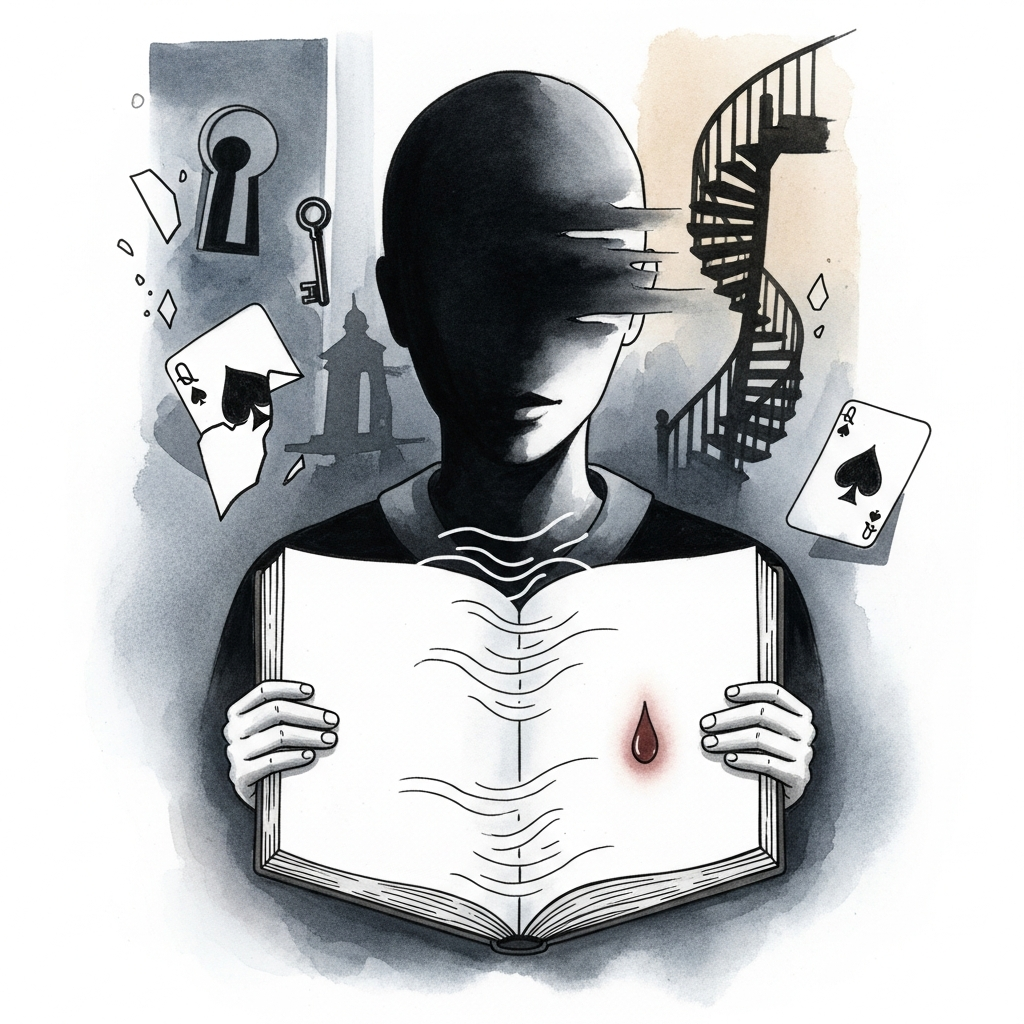
Explore the dark art of deception in fiction with this guide to five essential books featuring unreliable narrators, from psychological thrillers to literary masterpieces that weaponize perspective.
"The way I see it, we're all unreliable narrators of our lives who usually have absolute trust in our self-told stories," author Sarah Pinborough once observed. "Any truth is, after all, just a matter of perspective." In the world of fiction, however, that perspective is often weaponized to thrilling effect. The unreliable narrator has evolved from a literary gimmick into a fundamental pillar of modern psychological suspense and literary fiction. Unlike the classic whodunit, where the detective is a bastion of objective truth, these stories force the reader to navigate a labyrinth where the guide is the one holding the map upside down.
Whether driven by trauma, mental instability, or cold-blooded self-preservation, these narrators redefine the relationship between storyteller and audience. They exploit our inherent trust in the written word, leading us down garden paths only to pull the rug out from under us in the final act. Below, we examine five definitive titles where you truly cannot trust a single word.
It is impossible to discuss the modern era of unreliable narrators without acknowledging the seismic impact of Gillian Flynn's masterpiece. Gone Girl did not just utilize the trope; it perfected the "he said, she said" dual narrative structure that has been imitated endlessly since its publication.
The story follows Nick and Amy Dunne, a couple whose marriage dissolves into a toxic game of cat and mouse when Amy disappears on their fifth wedding anniversary. Flynn masterfully pits two distinct unreliable perspectives against one another. Nick is evasive and unlikable, hiding a secret life that makes him the perfect suspect. Amy, presented through diary entries, seems the victim of a fading romance. The brilliance lies in how Flynn dismantles both personas, revealing that the truth isn't found in the middle—it is found in the darkest corners of their sociopathic manipulations.
For readers who want to understand the gold standard of domestic suspense, this is the starting line.
Buy Gone Girl by Gillian Flynn on Amazon
While some narrators lie to save their skins, others lie because they simply cannot remember the truth. In Paula Hawkins's blockbuster bestseller, the unreliability stems from the protagonist's battle with alcoholism and memory loss. Rachel Watson is a voyeur, watching a "perfect" couple from her commuter train every morning until she witnesses something shocking—and then wakes up the next day covered in blood with no memory of the night before.
Rachel is a fascinating study in credibility. Because she doubts her own mind, the police—and the reader—view her testimony with skepticism. Hawkins uses this device to ratchet up the tension; Rachel isn't just fighting to solve a missing persons case; she is fighting to reclaim her own narrative from the blackouts that have stolen it. It is a visceral, gritty take on the genre that questions how much we can trust our own senses.
Buy The Girl on the Train by Paula Hawkins on Amazon
Alex Michaelides burst onto the scene with a debut that immediately cemented his status as a master of misdirection. The Silent Patient centers on Alicia Berenson, a famous painter who shoots her husband five times in the face and then never speaks another word. The story is narrated not by the killer, but by Theo Faber, the criminal psychotherapist obsessed with uncovering her motive.
The unreliability here is structural and insidious. By refusing to speak, Alicia becomes a blank canvas upon which others project their theories. Meanwhile, Theo's narration seems professional and detached, lulling the reader into a false sense of security. Michaelides excels at the "sleight of hand" technique, distracting the reader with professional jargon and red herrings while the real twist hides in plain sight. It is a textbook example of how omission can be just as deceptive as a lie.
Buy The Silent Patient by Alex Michaelides on Amazon
Unreliable narrators are not the exclusive domain of adult fiction. E. Lockhart's We Were Liars brings a sophisticated, literary edge to the Young Adult genre. The story follows Cadence Sinclair, a wealthy heiress spending her summer on her family's private island. Suffering from a mysterious head injury and amnesia, Cadence tries to piece together the events of "Summer 15," where something tragic shattered her pristine family dynamic.
Lockhart's prose is choppy and visceral, mirroring Cadence's fragmented state of mind. Unlike the calculated deception in Gone Girl, the unreliability here is rooted in deep emotional trauma and denial. The eventual revelation is not just a plot twist; it is an emotional gut-punch that forces the reader to re-evaluate every interaction that came before. It serves as a reminder that sometimes, the lies we tell ourselves are necessary for survival.
Buy We Were Liars by E. Lockhart on Amazon
While often categorized strictly as literary fiction or magical realism, Toni Morrison's Beloved employs the device of the unreliable narrator to explore the fragmentation caused by the trauma of slavery. Set in post-Civil War Ohio, the novel follows Sethe, a formerly enslaved woman whose home is haunted by the malevolent spirit of her daughter.
Morrison utilizes a shifting narrative perspective that is complex and fluid. The "truth" in Beloved is not linear; it is repressed, distorted, and reconstructed through the collective memory of characters who have been dehumanized. The unreliability here is not a trick to fool the reader, but a profound commentary on how trauma shatters the ability to construct a coherent life story. It is a challenging, haunting read that proves the technique can be used for more than just suspense—it can be used to exhume the ghosts of history.
Buy Beloved by Toni Morrison on Amazon
Why do readers flock to books that deliberately deceive them? Perhaps it is because these stories mirror the complexity of the information age, where objective truth is increasingly difficult to discern. Or perhaps it is simply the thrill of the puzzle—the challenge of outsmarting a narrator who holds all the cards.
Regardless of the reason, the unreliable narrator remains a powerful tool in a writer's arsenal. Whether through the calculated malice of Amy Dunne or the tragic fragmentation of Sethe, these stories remind us that truth is rarely pure and never simple.